Articoli scientifici

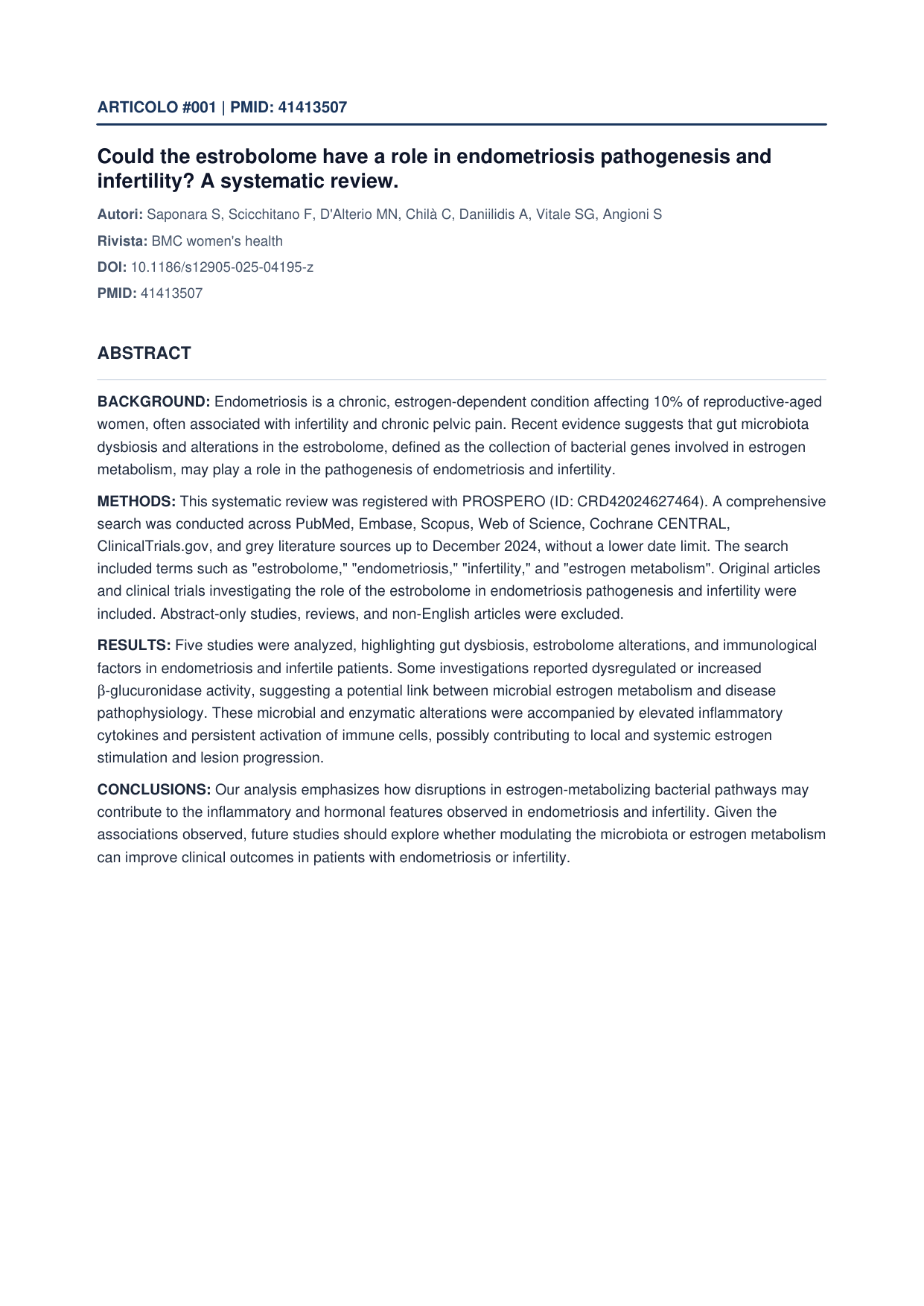
Could the estrobolome have a role in endometriosis pathogenesis and infertility? A systematic review

ABSTRACT: BACKGROUND: Endometriosis is a chronic, estrogen-dependent condition affecting 10% of reproductive-aged women, often associated with infertility and chronic pelvic pain. Recent evidence suggests that gut microbiota dysbiosis and alterations in the estrobolome, defined as the collection of bacterial genes involved in estrogen metabolism, may play a role in the pathogenesis of endometriosis and infertility. METHODS: This systematic review was registered with PROSPERO (ID: CRD42024627464). A comprehensive search was conducted across PubMed, Embase, Scopus, Web of Science, Cochrane CENTRAL, ClinicalTrials.gov, and grey literature sources up to December 2024, without a lower date limit. The search included terms such as "estrobolome," "endometriosis," "infertility," and "estrogen metabolism". Original articles and clinical trials investigating the role of the estrobolome in endometriosis pathogenesis and infertility were included. Abstract-only studies, reviews, and non-English articles were excluded. RESULTS: Five studies were analyzed, highlighting gut dysbiosis, estrobolome alterations, and immunological factors in endometriosis and infertile patients. Some investigations reported dysregulated or increased β-glucuronidase activity, suggesting a potential link between microbial estrogen metabolism and disease pathophysiology. These microbial and enzymatic alterations were accompanied by elevated inflammatory cytokines and persistent activation of immune cells, possibly contributing to local and systemic estrogen stimulation and lesion progression. CONCLUSIONS: Our analysis emphasizes how disruptions in estrogen-metabolizing bacterial pathways may contribute to the inflammatory and hormonal features observed in endometriosis and infertility. Given the associations observed, future studies should explore whether modulating the microbiota or estrogen metabolism can improve clinical outcomes in patients with endometriosis or infertility.

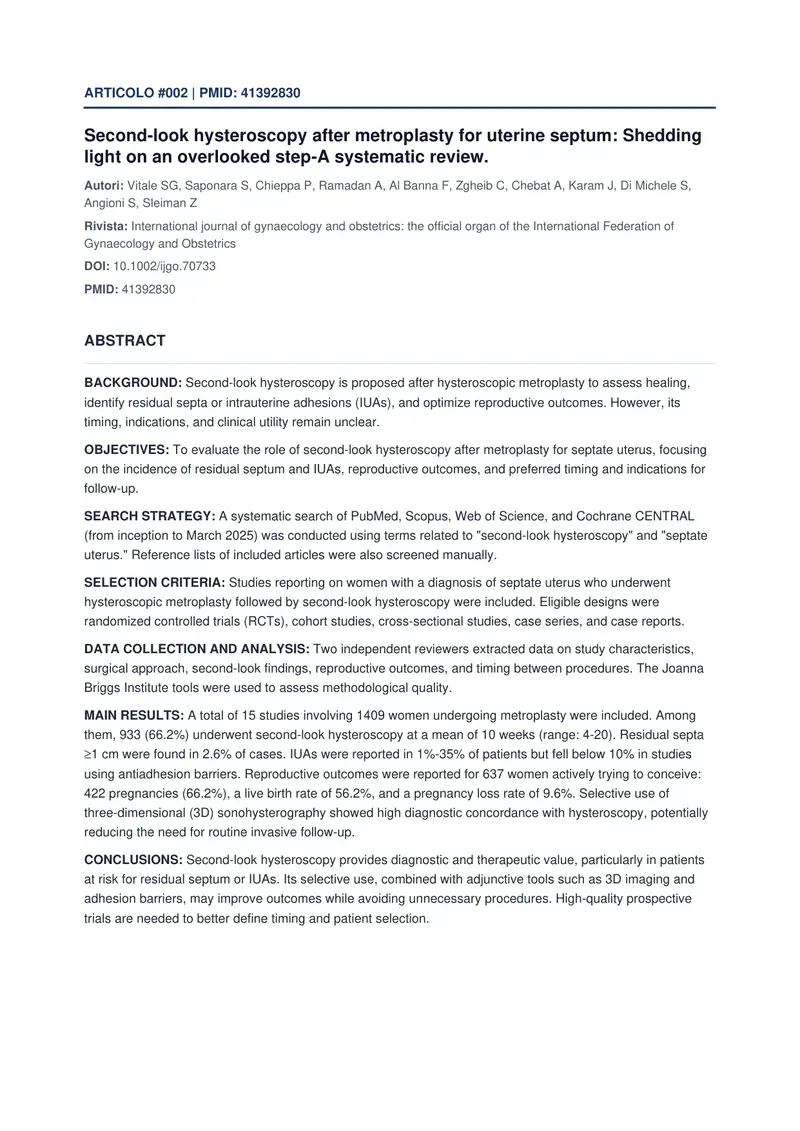
Second-look hysteroscopy after metroplasty for uterine septum: Shedding light on an overlooked step-A systematic review

ABSTRACT: BACKGROUND: Second-look hysteroscopy is proposed after hysteroscopic metroplasty to assess healing, identify residual septa or intrauterine adhesions (IUAs), and optimize reproductive outcomes. However, its timing, indications, and clinical utility remain unclear. OBJECTIVES: To evaluate the role of second-look hysteroscopy after metroplasty for septate uterus, focusing on the incidence of residual septum and IUAs, reproductive outcomes, and preferred timing and indications for follow-up. SEARCH STRATEGY: A systematic search of PubMed, Scopus, Web of Science, and Cochrane CENTRAL (from inception to March 2025) was conducted using terms related to "second-look hysteroscopy" and "septate uterus." Reference lists of included articles were also screened manually. SELECTION CRITERIA: Studies reporting on women with a diagnosis of septate uterus who underwent hysteroscopic metroplasty followed by second-look hysteroscopy were included. Eligible designs were randomized controlled trials (RCTs), cohort studies, cross-sectional studies, case series, and case reports. DATA COLLECTION AND ANALYSIS: Two independent reviewers extracted data on study characteristics, surgical approach, second-look findings, reproductive outcomes, and timing between procedures. The Joanna Briggs Institute tools were used to assess methodological quality. MAIN RESULTS: A total of 15 studies involving 1409 women undergoing metroplasty were included. Among them, 933 (66.2%) underwent second-look hysteroscopy at a mean of 10 weeks (range: 4-20). Residual septa ≥1 cm were found in 2.6% of cases. IUAs were reported in 1%-35% of patients but fell below 10% in studies using antiadhesion barriers. Reproductive outcomes were reported for 637 women actively trying to conceive: 422 pregnancies (66.2%), a live birth rate of 56.2%, and a pregnancy loss rate of 9.6%. Selective use of three-dimensional (3D) sonohysterography showed high diagnostic concordance with hysteroscopy, potentially reducing the need for routine invasive follow-up. CONCLUSIONS: Second-look hysteroscopy provides diagnostic and therapeutic value, particularly in patients at risk for residual septum or IUAs. Its selective use, combined with adjunctive tools such as 3D imaging and adhesion barriers, may improve outcomes while avoiding unnecessary procedures. High-quality prospective trials are needed to better define timing and patient selection.

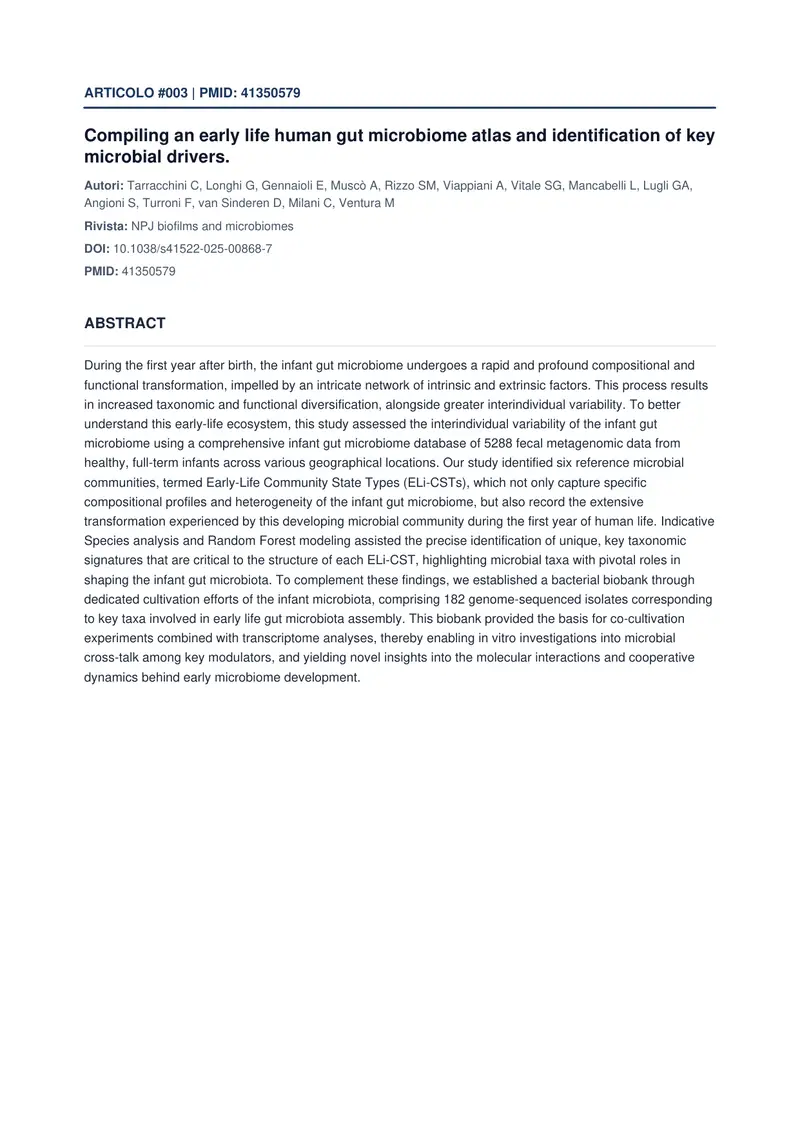
Compiling an early life human gut microbiome atlas and identification of key microbial drivers

ABSTRACT: During the first year after birth, the infant gut microbiome undergoes a rapid and profound compositional and functional transformation, impelled by an intricate network of intrinsic and extrinsic factors. This process results in increased taxonomic and functional diversification, alongside greater interindividual variability. To better understand this early-life ecosystem, this study assessed the interindividual variability of the infant gut microbiome using a comprehensive infant gut microbiome database of 5288 fecal metagenomic data from healthy, full-term infants across various geographical locations. Our study identified six reference microbial communities, termed Early-Life Community State Types (ELi-CSTs), which not only capture specific compositional profiles and heterogeneity of the infant gut microbiome, but also record the extensive transformation experienced by this developing microbial community during the first year of human life. Indicative Species analysis and Random Forest modeling assisted the precise identification of unique, key taxonomic signatures that are critical to the structure of each ELi-CST, highlighting microbial taxa with pivotal roles in shaping the infant gut microbiota. To complement these findings, we established a bacterial biobank through dedicated cultivation efforts of the infant microbiota, comprising 182 genome-sequenced isolates corresponding to key taxa involved in early life gut microbiota assembly. This biobank provided the basis for co-cultivation experiments combined with transcriptome analyses, thereby enabling in vitro investigations into microbial cross-talk among key modulators, and yielding novel insights into the molecular interactions and cooperative dynamics behind early microbiome development.

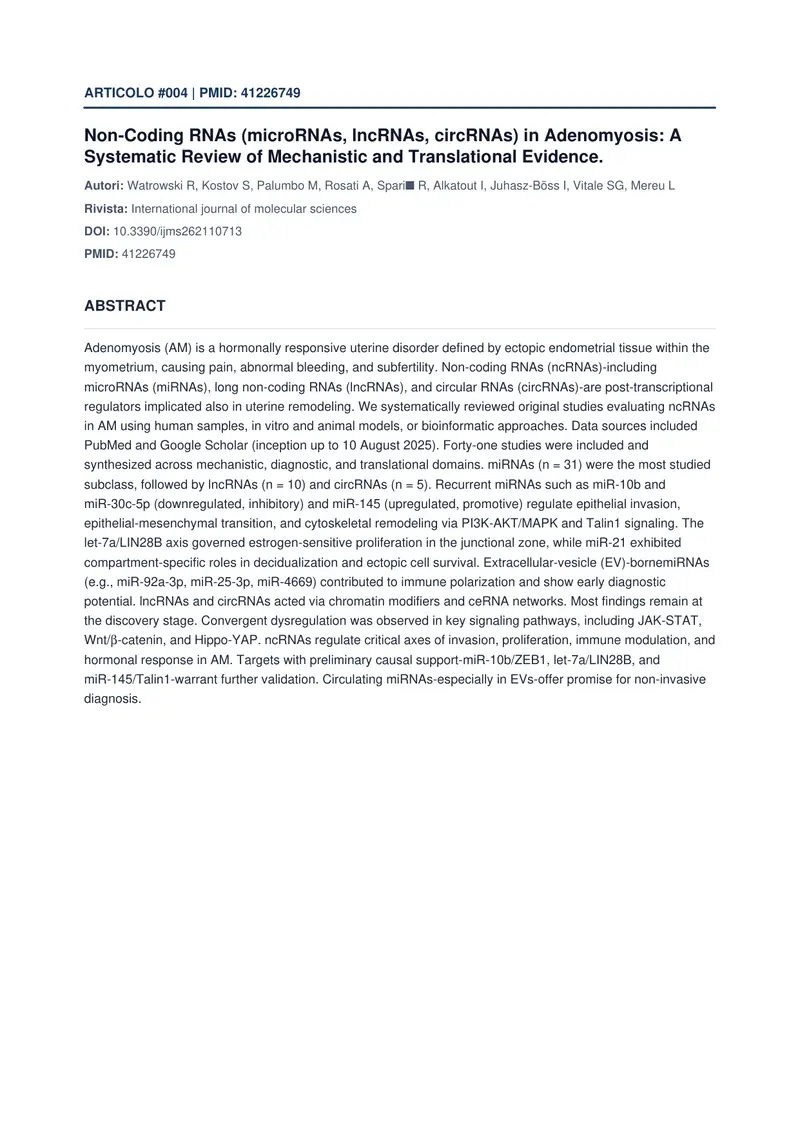
Non-Coding RNAs (microRNAs, lncRNAs, circRNAs) in Adenomyosis: A Systematic Review of Mechanistic and Translational Evidence

ABSTRACT: Adenomyosis (AM) is a hormonally responsive uterine disorder defined by ectopic endometrial tissue within the myometrium, causing pain, abnormal bleeding, and subfertility. Non-coding RNAs (ncRNAs)-including microRNAs (miRNAs), long non-coding RNAs (lncRNAs), and circular RNAs (circRNAs)-are post-transcriptional regulators implicated also in uterine remodeling. We systematically reviewed original studies evaluating ncRNAs in AM using human samples, in vitro and animal models, or bioinformatic approaches. Data sources included PubMed and Google Scholar (inception up to 10 August 2025). Forty-one studies were included and synthesized across mechanistic, diagnostic, and translational domains. miRNAs (n = 31) were the most studied subclass, followed by lncRNAs (n = 10) and circRNAs (n = 5). Recurrent miRNAs such as miR-10b and miR-30c-5p (downregulated, inhibitory) and miR-145 (upregulated, promotive) regulate epithelial invasion, epithelial-mesenchymal transition, and cytoskeletal remodeling via PI3K-AKT/MAPK and Talin1 signaling. The let-7a/LIN28B axis governed estrogen-sensitive proliferation in the junctional zone, while miR-21 exhibited compartment-specific roles in decidualization and ectopic cell survival. Extracellular-vesicle (EV)-bornemiRNAs (e.g., miR-92a-3p, miR-25-3p, miR-4669) contributed to immune polarization and show early diagnostic potential. lncRNAs and circRNAs acted via chromatin modifiers and ceRNA networks. Most findings remain at the discovery stage. Convergent dysregulation was observed in key signaling pathways, including JAK-STAT, Wnt/β-catenin, and Hippo-YAP. ncRNAs regulate critical axes of invasion, proliferation, immune modulation, and hormonal response in AM. Targets with preliminary causal support-miR-10b/ZEB1, let-7a/LIN28B, and miR-145/Talin1-warrant further validation. Circulating miRNAs-especially in EVs-offer promise for non-invasive diagnosis.

Logo Prof. Salvatore Giovanni Vitale

Prof. Salvatore Giovanni Vitale